A newly built home or commercial property can look unfinished until the landscape catches up. Bare soil, rough grades, and temporary access paths may not seem urgent at first, but they shape how well the finished yard drains, grows, and holds up. A clear landscaping timeline for a new property helps you install the right features in the right order, from drainage and irrigation to lawn, plants, and finishing details. For property owners around Eden, Ogden, Layton, Kaysville, and the Wasatch Front, timing matters. Utah’s freeze-thaw cycles, dry summers, spring runoff, and changing mountain weather can affect how soil settles and how fast new grass establishes. Grass Plus Inc. helps residential, commercial, and industrial clients plan landscapes that are built for real use, not just first impressions.
Why a New Construction Landscaping Timeline Matters
New construction often leaves behind compacted soil, uneven grades, and areas where heavy equipment has changed natural drainage. Before adding plants or lawn, the site needs a practical plan that supports long-term health and easy care.
Start with grading, drainage, and soil prep
The first step is not the prettiest, but it is one of the most important. Grading moves water away from foundations, walkways, driveways, and low spots. Drainage planning helps prevent pooling, erosion, and soggy planting beds after snowmelt or heavy rain. Soil prep comes next. Construction traffic can pack the ground, which makes it harder for roots to grow and water to soak in. Loosening soil, adding amendments where needed, and removing debris give the rest of the landscape a better start.
Plan around Utah’s seasons
In Northern Utah, spring and fall are often strong windows for planting because temperatures are cooler and moisture is easier to manage. Summer installations can still work, but they require careful watering. Winter may be better for planning, design, and scheduling rather than planting. Good landscaping services in Utah should account for elevation, sun exposure, slope, and water needs. A property near the foothills may need different erosion control or irrigation planning than a flatter lot in town.
Building Your New Yard, Phase by Phase
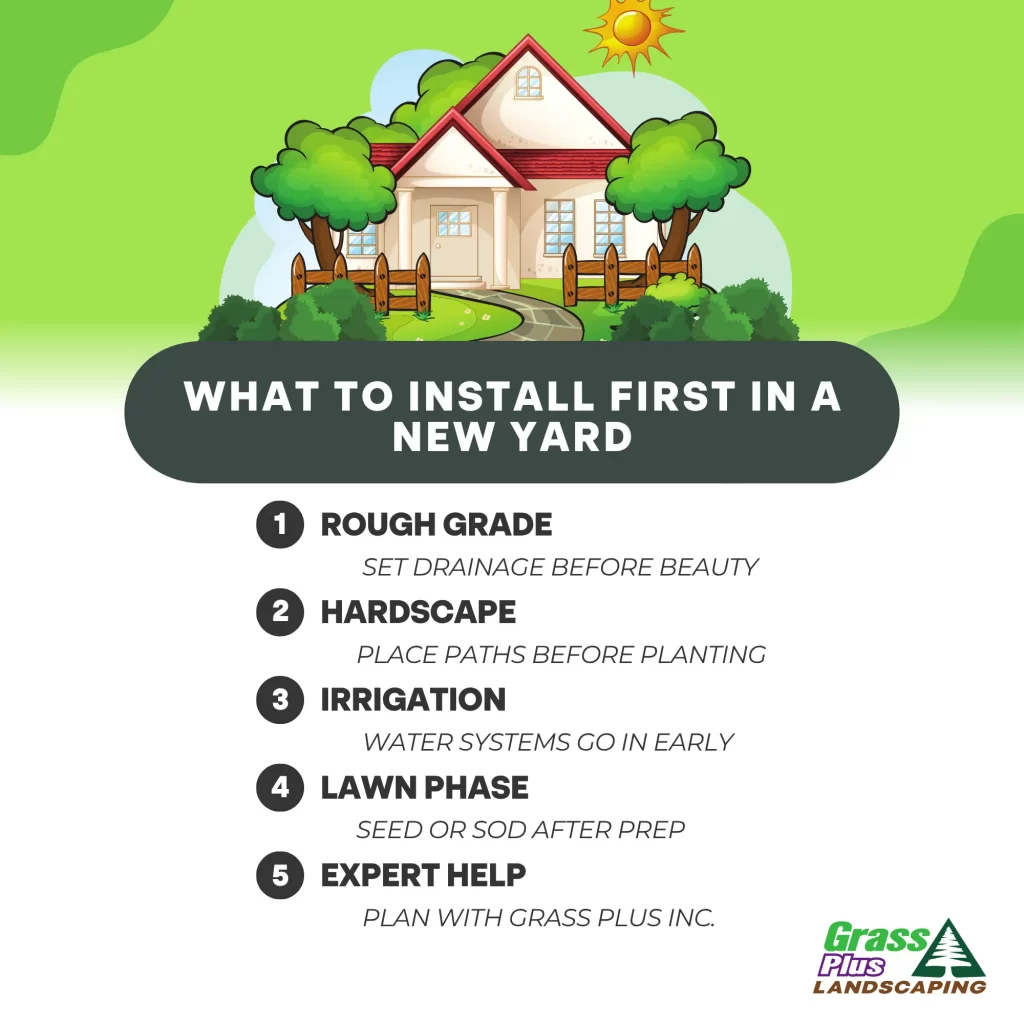
A new yard should come together in layers. Each phase supports the next, and skipping ahead can create extra cost later.
Phase 1: Site prep and rough grading
This stage happens after major construction is complete but before finished landscaping begins. Crews clear debris, shape the land, correct low areas, and prepare access points. Erosion control should be implemented right away if the property has slopes, disturbed soil, or exposed banks. The right time has come to think about how we will use the space. A family yard may need play space and shade. A commercial property may need clean entry points, visibility, and durable planting areas. Grass Plus Inc. can help align the early plan with how the property will function after move-in.
Phase 2: Irrigation and hardscape layout
Before lawn or planting beds go in, underground systems should be planned. Irrigation system installation is easier and cleaner before sod, seed, mulch, or plants are installed. This phase may also include edging, walkways, patios, retaining walls, or other hardscape elements. Installing these too late can disturb finished areas. Installing them too fast, before grading is settled, can cause alignment or drainage issues.
Phase 3: Soil, seed, sod, and planting
Once the groundwork is ready, the landscape can start to look alive. Soil improvements, lawn installation, tree planting, shrub beds, and mulch can begin. For large open areas, slopes, or properties where erosion control is a concern, hydroseeding for new lawns can be a practical option. It helps cover bare soil efficiently and supports lawn establishment when watering and timing are handled correctly. This is also where landscape design and installation shapes the overall look. Plant choices should match the site, not just the style. Sun, wind, soil, water access, and maintenance expectations all matter.
Phase 4: Finishing details and maintenance
After the main installation, smaller details finish the space. Mulch, stone, seasonal color, lighting, final edging, and cleanup help the landscape feel complete. Maintenance begins right away. New plants need monitoring. New lawns need careful watering before mowing begins. People should check and adjust irrigation as weather changes. Skipping this early care is one of the easiest ways to lose momentum after installation.
What Should Wait Until the Right Time?
Builders should not install every landscape feature immediately after the building is finished. Some items perform better when soil has settled, weather is favorable, or irrigation is ready.
Trees, shrubs, and perennials
Trees and shrubs should be planted when they have the best chance to establish roots before weather stress hits. In Utah, that often means spring or fall, depending on the plant and site. Perennials also need enough time to settle before extreme heat or hard freezes. Planting too fast, before grading and irrigation are complete, can lead to transplant stress or damage from later construction work. Planting too late in hot, dry weather can increase watering demand.
Lawn establishment and watering
New lawns need consistent moisture. If you install seed or sod before the irrigation system is ready, the lawn may struggle right away. If you install it before drainage is corrected, low areas can become patchy or muddy. A smart landscaping timeline puts lawn installation after rough grading, soil prep, irrigation layout, and major hardscape work. That order protects the investment and makes early maintenance easier.
Takeaways
A successful new construction landscape starts before the first plant goes in. Grading, drainage, soil preparation, irrigation, and hardscape planning all shape how well the finished yard performs. The right timeline keeps work in the proper order, reduces rework, and helps your new outdoor space grow into something durable, useful, and attractive. With planning and local experience, your landscape can feel finished and perform better for years.
Frequently Asked Questions
How soon after construction should landscaping begin?
Construction workers begin landscaping after heavy traffic ends and the site is safe to grade. It is best to start with drainage, soil prep, and irrigation planning before installing a lawn or plants.
Should irrigation be installed before plants?
Yes, you should plan and install irrigation before planting beds, sod, or seed. This prevents unnecessary digging through finished areas and helps new plants receive consistent water.
Is hydroseeding a good choice for new construction?
Hydroseeding can be a good option for larger lawn areas, slopes, and disturbed soil. It works best when the soil is prepared, watering is consistent, and the timing fits local weather.
What time of year is best for new landscaping in Utah?
Spring and fall are often ideal for many planting and lawn projects because temperatures are milder. Summer work can still be successful with careful irrigation and plant selection.
Can Grass Plus Inc. help with both design and installation?
Yes, Grass Plus Inc. provides landscaping design, installation, irrigation, hydroseeding, erosion control, and related services. That makes it easier to coordinate the project from early planning through completion.
Plan Your New Landscape with Grass Plus Inc.
If your property is just built or still in the final construction stage, Grass Plus Inc. can help you build a realistic new construction landscaping timeline that fits the site, season, and long-term use of the space. Our team works with residential, commercial, and industrial properties across Utah and surrounding regions. Call (801) 394-2244 or visit us at 5554 E 2200 N, Eden, UT 84310, United States to discuss your landscape design, irrigation, hydroseeding, or installation needs.