

A green Utah lawn is built slowly, one season at a time. Soil warms late, summer gets dry, and fall can be the best chance to strengthen roots before snow returns. If your grass fades, thins, or grows unevenly, the right fertilization services can help bring the lawn back into balance. This Utah lawn fertilization schedule explains how feeding works through the year and why timing matters for local yards around Eden, Ogden Valley, and nearby Utah communities.
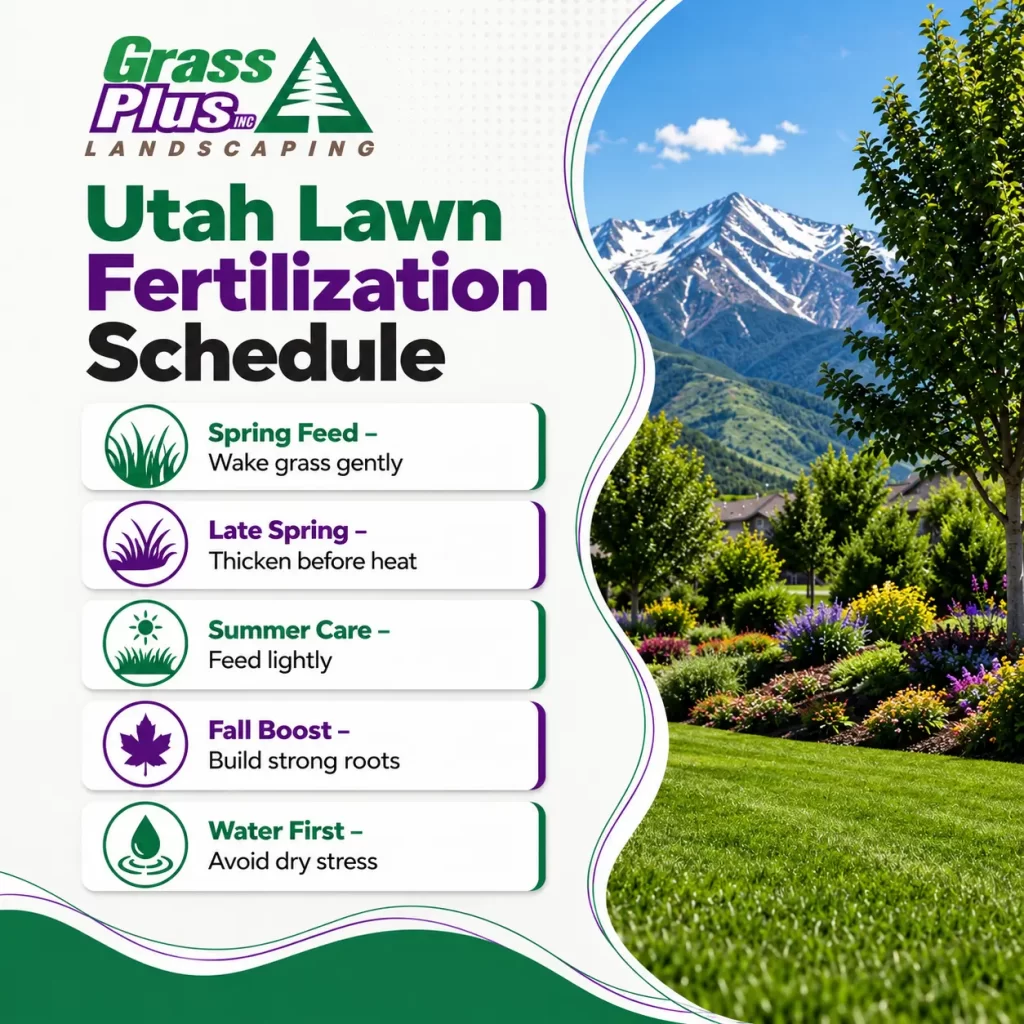
Utah Lawn Fertilization Schedule by Season
Grass does not need the same nutrient push every month. A smart schedule follows the growing cycle, supports root strength, and avoids feeding too heavily during heat or drought stress.
Early Spring Feeding
Early spring is about waking the lawn up gently. Once the grass starts growing and the soil is no longer cold, a balanced fertilizer can support fresh green-up without forcing weak top growth too soon. In Eden and the Ogden Valley area, this often means waiting until the lawn is actively growing instead of rushing after the first warm afternoon.
Late Spring Feeding
Late spring is a key point in a Utah lawn care schedule because weeds and turf begin competing hard for nutrients, water, and sunlight. A planned feeding can help grass thicken before summer heat arrives. For many properties, this is also a good time to check for broadleaf weeds, thin patches, and compacted areas. Grass Plus Inc. also offers lawn maintenance that can pair fertilization with mowing, trimming, edging, aeration, overseeding, and seasonal cleanup.
Summer Feeding
Summer fertilizer should be handled carefully. Hot days, dry wind, and irrigation issues can stress grass, especially on open properties near foothills, pasture edges, or large sunny lots. A heavy feeding during drought stress may burn or weaken the turf. Light feeding may help in some lawns, but watering and soil condition should be checked first.
Fall Feeding
Fall is one of the most valuable feeding windows. Cooler air, warm soil, and more stable moisture help grass repair summer damage and build reserves for winter. If you are wondering when to fertilize grass in Utah, fall should be near the top of the list. Strong fall roots often lead to better spring color and thicker growth.
How Utah Weather Changes Lawn Feeding
Northern Utah lawns deal with a mix of mountain weather, dry stretches, snow, and fast seasonal shifts. That is why a one-size calendar rarely works as well as a plan based on soil, turf condition, and local weather.
Mountain Valleys and Cool Nights
Ogden Valley lawns can experience warm afternoons and cool nights in the same week. That swing affects how fast grass grows and how quickly fertilizer is used. Around local recreation areas and rural properties, lawns may also sit on varied soil, from sandy spots to heavier compacted ground. Local property owners can follow community updates through Ogden Valley City when planning seasonal outdoor work, especially during dry periods, public notices, or fire restriction seasons.
Heat, Dry Soil, and Watering Habits
Fertilizer works best when the lawn has enough moisture to move nutrients into the root zone. If dry patches remain even with regular watering, the issue may be irrigation coverage, pressure, runoff, or compacted soil. The Grass Plus Inc. blog on dry grass despite daily watering explains common irrigation problems. These issues can make a lawn look hungry when the real problem is water movement.
How to Know When Your Lawn Needs Nutrients
The calendar gives a starting point, but the lawn itself gives the clearest clues. Look at color, density, growth rate, weed pressure, and how the grass responds after mowing and watering.
Pale Color and Slow Growth
Grass that looks pale, weak, or slow to recover after mowing may need nutrients. Still, fertilizer should not be the first guess every time. Poor watering, compacted soil, dull mower blades, insects, or disease can create similar symptoms.
Weeds, Thin Spots, and Compacted Soil
Thin turf leaves room for weeds. Proper feeding can help grass fill in, but weeds and compaction may also need direct treatment. For lawn fertilization in Eden, UT, the best results usually come from matching fertilizer timing with weed control, soil improvement, and seasonal maintenance. Homeowners searching for fertilization services in Eden, UT, should look for a plan that considers local soil, grass condition, watering habits, and seasonal stress. Avoid applying the same product on every property.
Pair Fertilization With Better Lawn Care
Feeding is only one part of a healthy lawn. Grass responds better when mowing, watering, weed control, and soil care work together.
Mowing and Weed Control
Cutting grass too short can weaken roots and make summer stress worse. Taller, properly mowed grass shades the soil and helps limit weed pressure. For broader property needs, Grass Plus Inc. provides landscaping services that support residential, commercial, and industrial landscapes across Utah and nearby states.
Irrigation Timing
A fertilized lawn still struggles if water is uneven. Sprinkler heads, timers, valves, and pressure should be checked before increasing fertilizer. A properly designed irrigation system helps nutrients reach the root zone while reducing runoff and waste.
Takeaways
A healthy Utah lawn needs the right nutrients at the right time. Spring supports green-up, summer calls for caution, and fall builds the roots that carry grass through winter. The best results come from pairing fertilization with proper mowing, watering, weed control, and soil care. A local plan gives your grass a better chance to handle Utah’s dry spells, cool nights, and changing seasons.
Frequently Asked Questions
How many times a year should I fertilize my Utah lawn?
Most Utah lawns benefit from several timed feedings during the growing season, with spring and fall being especially important. The exact number depends on grass type, soil condition, irrigation, shade, and how heavily the lawn is used.
Is spring or fall better for lawn fertilization?
Both seasons matter, but fall is often the strongest window for root development. Spring feeding helps green-up and growth, while fall feeding helps the lawn recover from summer and prepare for winter.
Can I fertilize during hot summer weather?
You can, but it should be done carefully. If the lawn is drought-stressed, dry, or poorly watered, heavy fertilizer may do more harm than good.
Should I water after fertilizing?
Most fertilizer applications need water to move nutrients into the soil. Follow product directions or your technician’s guidance so nutrients reach the roots without runoff.
Why does my lawn still look bad after fertilizing?
Fertilizer cannot fix every lawn problem. Irrigation failure, compacted soil, pests, disease, thatch, or mowing too short can all keep grass from improving.
Get Seasonal Lawn Feeding Help From Grass Plus Inc.
A good Utah lawn fertilization schedule should match your property, not just the month on the calendar. Grass Plus Inc. helps Utah property owners plan healthier lawns with fertilization, weed control, maintenance, irrigation, and landscaping support. To schedule help, call (801) 394-2244 or visit Grass Plus Inc. at 5554 E 2200 N, Eden, UT 84310, United States. A seasonal plan can help your lawn stay greener, thicker, and better prepared for the weather ahead.