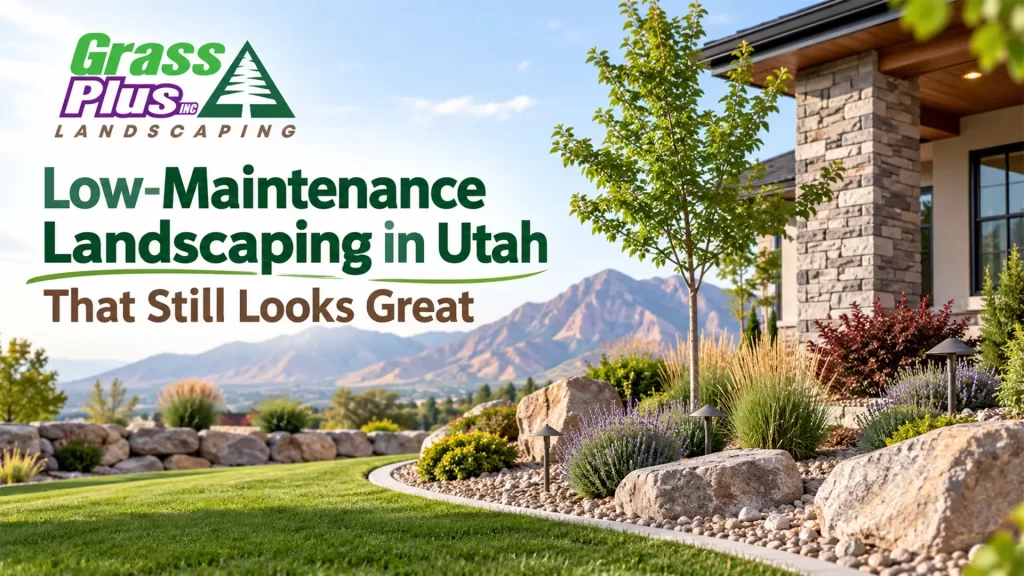
Low-maintenance landscaping can look colorful, intentional, and welcoming without demanding every free weekend. The key is to design for your property’s sun, soil, water, and daily use from the start. At Grass Plus Inc., our landscape design and installation services help Northern Utah property owners balance beauty with practical care.
In Eden, UT, and across Ogden Valley, a yard must handle dry summer weather, cold winters, and strong seasonal changes. An easy-care plan uses those conditions as design guides. It reduces repeated chores while keeping living plants for color, texture, and curb appeal.
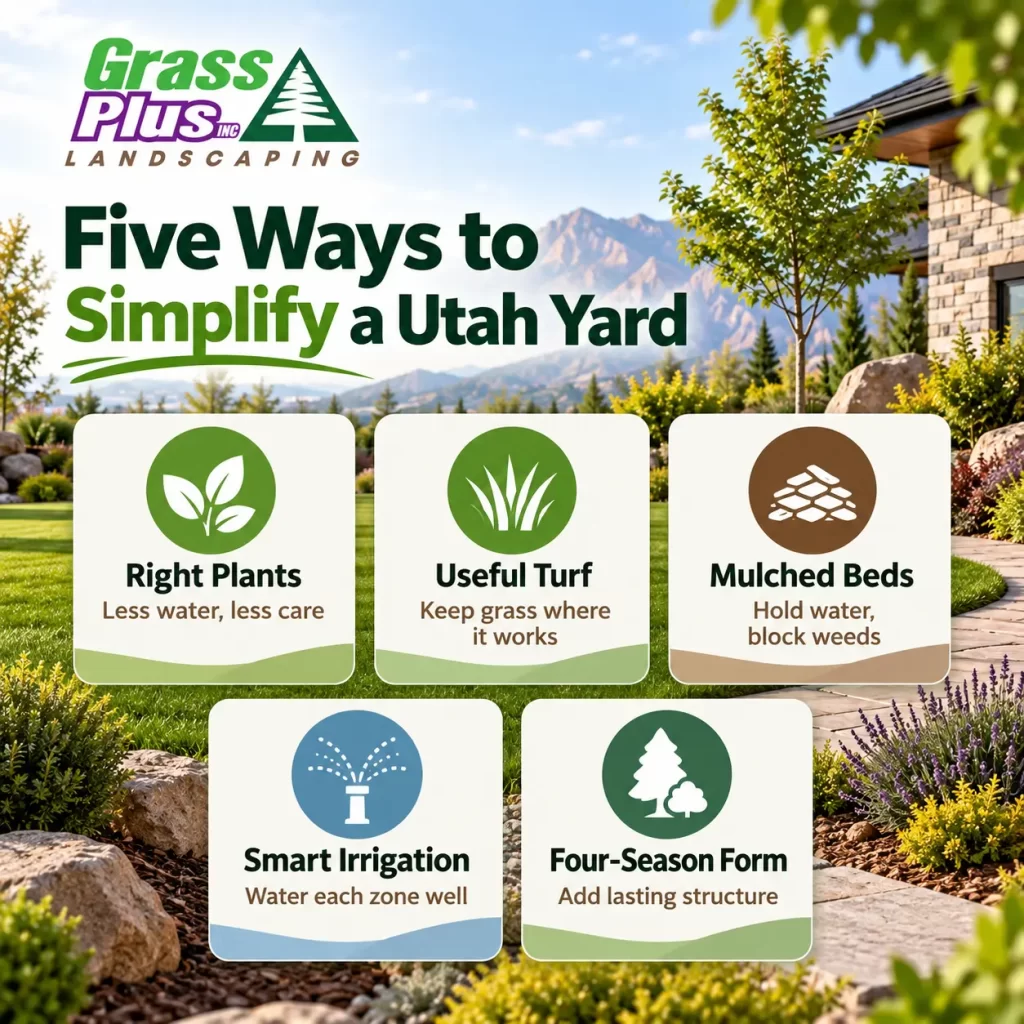
Start With a Simple, Site-Specific Plan
A lower-maintenance yard begins with fewer problem areas, not fewer design choices. Map sunny and shaded spaces, slopes, drainage patterns, gathering areas, and routes for doors, patios, and driveways. This helps place each feature where it performs well with less correction later.
Keep the layout clear and repeat a small group of plants, colors, and materials. Repetition makes a landscape feel connected and limits the number of different care routines. Defined bed lines also make mowing, edging, and seasonal cleanup faster.
Our full-service landscaping team plans living and built features together. That broad view can prevent narrow lawn strips, crowded shrubs, awkward sprinkler coverage, and other details that create extra work.
Choose Plants That Fit Northern Utah
Plants suited to local conditions usually need less water, replacement, and protection once established. Start with each area’s sunlight, exposure, soil drainage, and mature space. A plant that naturally fits its location needs less pruning and is less likely to struggle.
For water-wise landscaping in Utah, combine adapted shrubs, ornamental grasses, perennials, and groundcovers with different bloom times. Utah water-wise plant tools can help you compare choices for local conditions and water needs. Select a limited palette, then repeat those plants in groups for stronger visual impact.
Drought-tolerant landscaping still needs regular water while new roots become established. After that period, grouping plants with similar needs makes care simpler. It also reduces the risk of watering one plant correctly while overwatering its neighbor.
Keep Turf Only Where It Works
Turf is easiest to maintain when it has a clear purpose and a simple shape. Keep lawn where children play, pets need open space, or a green surface supports outdoor activities. Remove grass from steep slopes, tight corners, and narrow strips that are difficult to mow or water evenly.
This approach does not require an all-rock yard. Replace unused turf with planted beds, paths, or gathering spaces that add function and visual variety. Clean boundaries between turf and beds keep the result polished.
When grass remains part of the plan, set realistic expectations for mowing, edging, feeding, and seasonal care. A practical maintenance schedule protects the lawn without letting it control the entire landscape.
Use Mulch and Hardscape to Cut Routine Work
Mulch reduces evaporation, helps limit weeds, and gives planting beds a finished surface. Apply it at a useful depth without piling it against trunks or plant crowns. Refresh thin areas as needed rather than covering healthy soil with a heavy new layer every year.
Hardscape can replace high-effort areas with walkways, patios, steps, or seating zones. These features should support how you move through and enjoy the property. Our guide to hardscapes that add structure and function explains how built elements can work within a complete landscape plan.
Use hardscape with restraint. Large heat-holding surfaces and loose rock everywhere can make a yard harsh and less comfortable. A balanced mix of plants, mulch, and durable surfaces usually looks softer and supports an easy-care yard design.
Match Irrigation to Each Planting Zone
Efficient irrigation reduces hand watering and supports steady plant health. Separate turf from planting beds and group plants with similar water needs in the same zone. Drip irrigation can serve many beds, while properly placed sprinklers can cover practical lawn areas.
Check each zone during the growing season for clogged emitters, tilted heads, leaks, overspray, and runoff. Adjusting the schedule as Northern Utah weather changes can prevent both dry patches and soggy soil. Our irrigation design, build, and installation services support more consistent coverage and easier seasonal adjustments.
Automation helps, but it does not replace observation. A quick monthly system check can catch small problems before plants decline or water bills rise.
Build in Year-Round Structure
A great low-maintenance yard should still look organized when flowers fade. Use evergreen plants, ornamental grasses, trees with interesting bark, and well-placed hardscape to carry the design through winter. In spring and summer, add restrained groups of flowering plants instead of many scattered varieties.
Choose plants by mature size so they do not crowd paths, windows, or one another. Leave access to irrigation parts and utility areas. These practical choices reduce pruning and repairs while keeping the landscape neat through Eden’s changing seasons.
Low-maintenance landscaping ideas work best when every feature earns its place. A useful lawn, a shaded seat, a repeating plant group, or a clear path adds more value than a feature chosen only to fill space.
Takeaways
A low-maintenance yard still takes a plan. A simple layout, well-matched plants, useful turf, mulched beds, balanced hardscape, and properly zoned irrigation can cut routine work without creating a bare yard.
For Northern Utah properties, design around dry summers, cold winters, and strong seasonal shifts. The result can stay attractive because its plants and materials fit the site, not because someone is constantly correcting it.
Frequently Asked Questions
What makes a landscape low maintenance?
A landscape becomes low maintenance when its plants, turf, irrigation, and hardscape fit the site’s conditions and intended use. Simple bed shapes, properly spaced plants, mulch, and easy access for routine care also reduce repeated work.
Which plants work well in a low-maintenance Utah yard?
Plants adapted to Utah’s climate and matched to the site’s sun, soil, and water work well in an easy-care yard. A suitable mix may include water-wise shrubs, ornamental grasses, perennials, groundcovers, and trees selected for their mature size.
Does low maintenance mean removing all the grass?
No, low maintenance does not mean removing all the grass. Keep turf in simple, usable areas, and replace difficult slopes or narrow strips with beds, paths, or other practical features.
How does mulch reduce yard work?
Mulch reduces yard work by slowing moisture loss and limiting many weeds in planting beds. It also creates a clean surface, though thin areas still need occasional refreshing.
Can an irrigation system make landscaping easier to maintain?
Yes, a properly designed irrigation system can make landscaping easier to maintain. Separate zones and seasonal adjustments deliver water more consistently, but the system still needs periodic checks for leaks, clogs, and poor coverage.
Plan a Lower-Maintenance Landscape With Grass Plus Inc.
Grass Plus Inc. can help you turn a demanding yard into an attractive, practical outdoor space. We design and install landscapes, irrigation, plantings, and hardscape for residential, commercial, and industrial properties across Utah and nearby states.
To discuss your goals, request a landscaping consultation or call (801) 394-2244. You can also visit our office at 5554 E 2200 N, Eden, UT 84310. Start planning a landscape that looks good and asks less of your time.